Psycho Fridge Repair Cycle
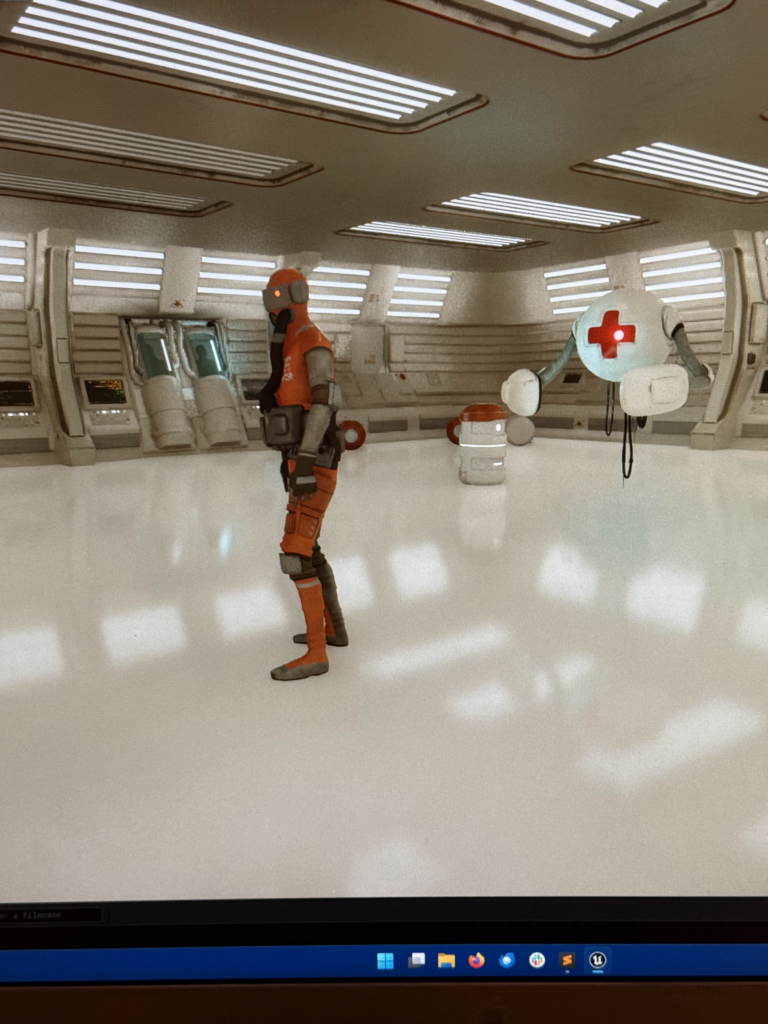
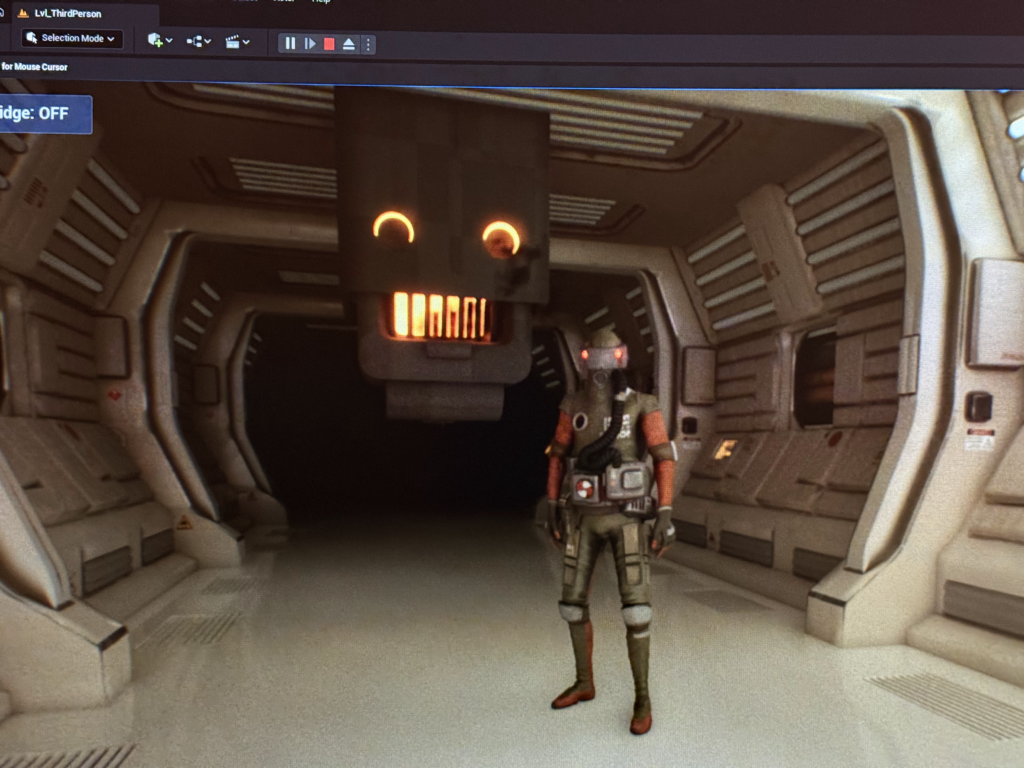
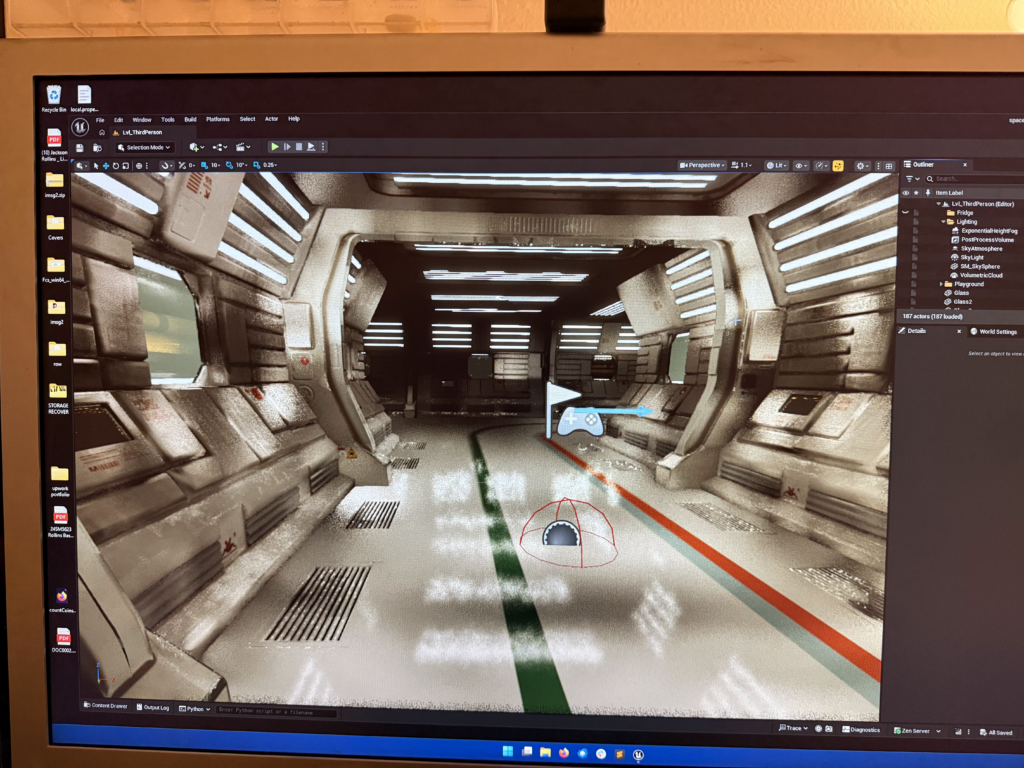
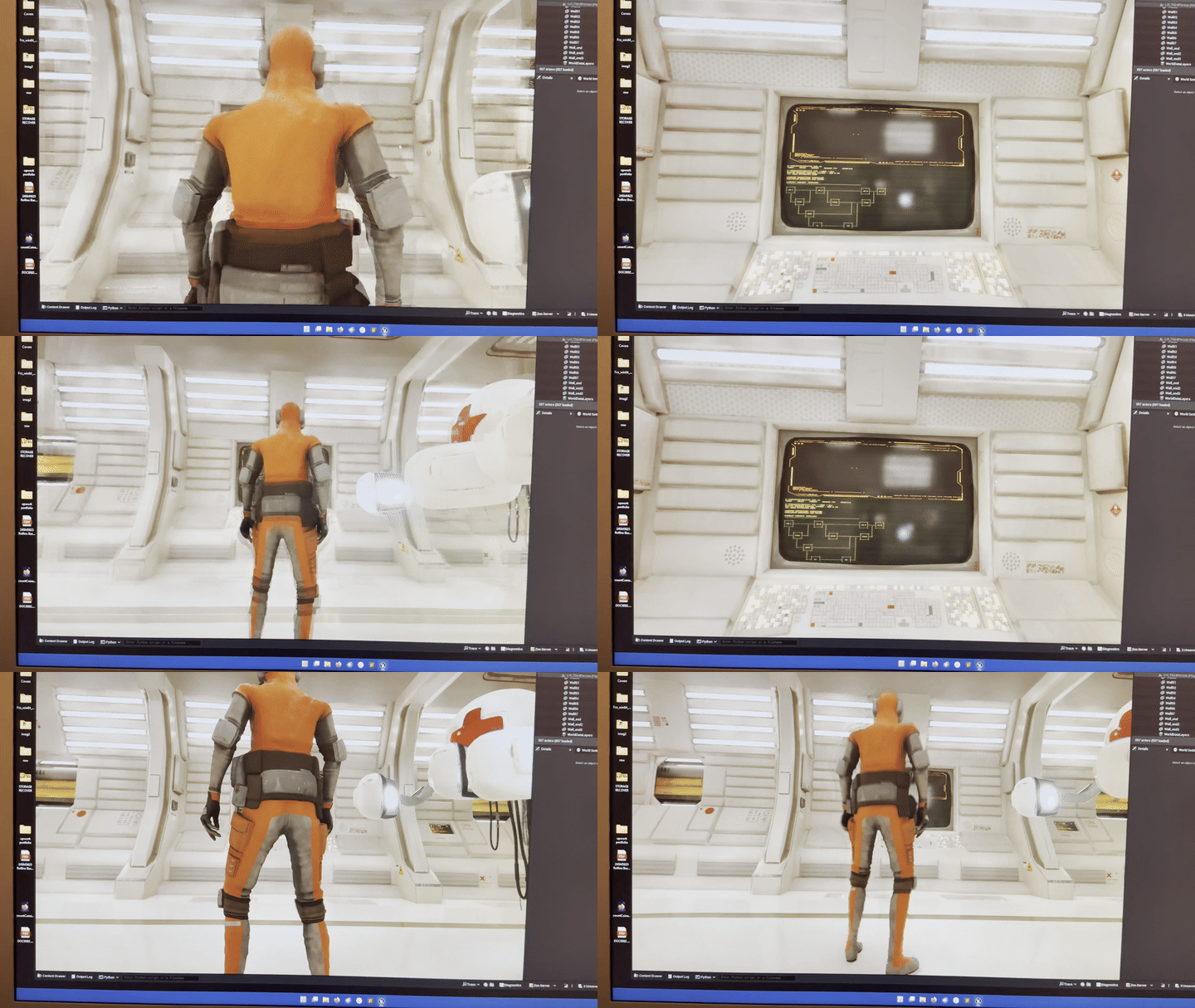
Psycho Fridge Repair Cycle is an indie game I’m making with two friends in Unreal Engine 5.7. You explore a derelict spaceship, work its computers, release a medical bot or two, and try not to get run down by the fridge. Yes, the fridge. Every system is deliberately small and legible: anything the player touches has a visible, tunable chain of components behind it.
What’s in the game
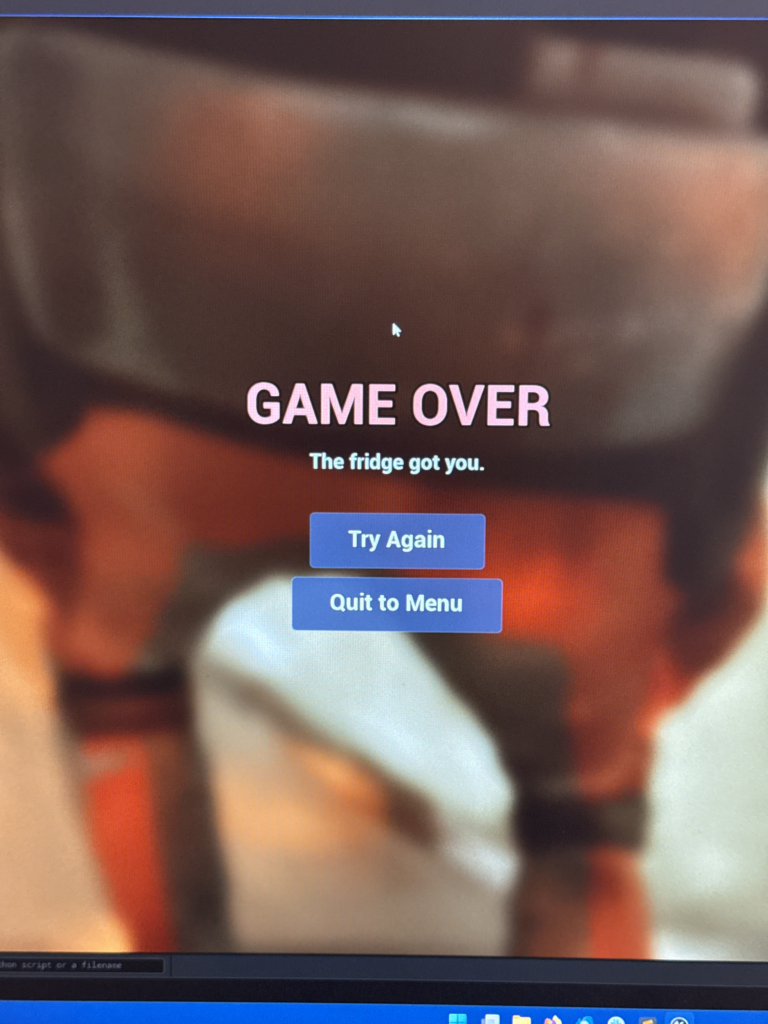
- The fridge. A physics-driven appliance that locks onto the player and follows them through the ship. It’s a capsule-collision pawn with gravity and wall blocking, locked upright, and touching it ends the game. A HUD toggle switches it off for playtests.
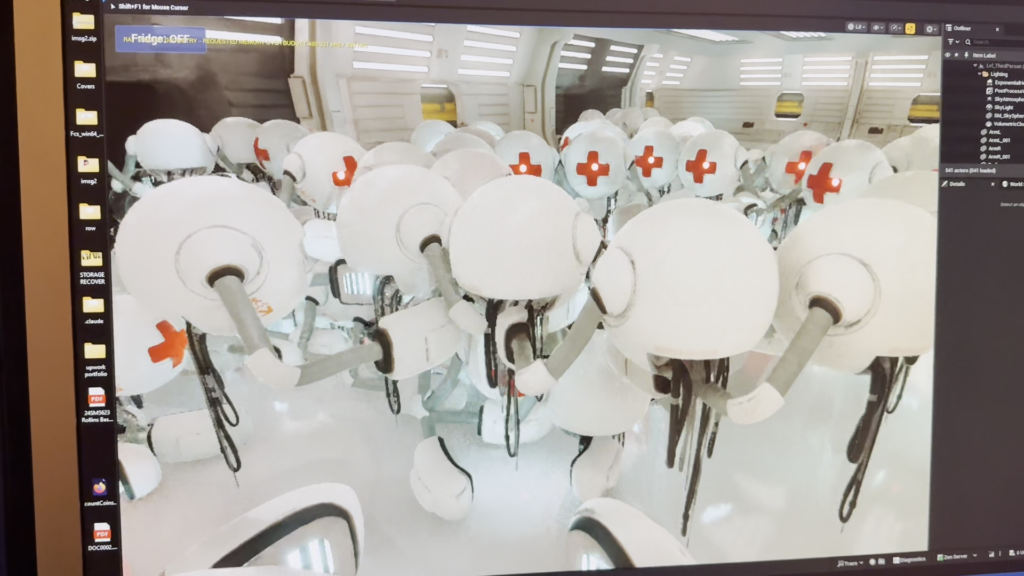
- Medical bots. Wall-mounted EMT tubes eject a bot when you press E, then reload on a six-second timer. Each bot falls down the chute, lands, and hovers off to wander the navmesh. Punch one and it ragdolls, then shatters into debris that flies in the direction of the hit and dissolves over time, so nothing piles up on the navmesh.
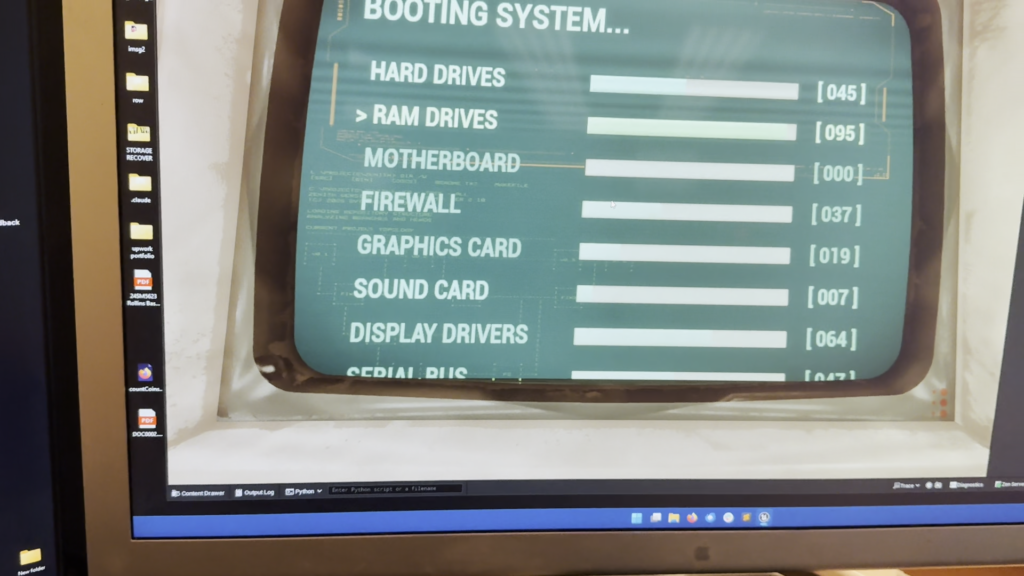
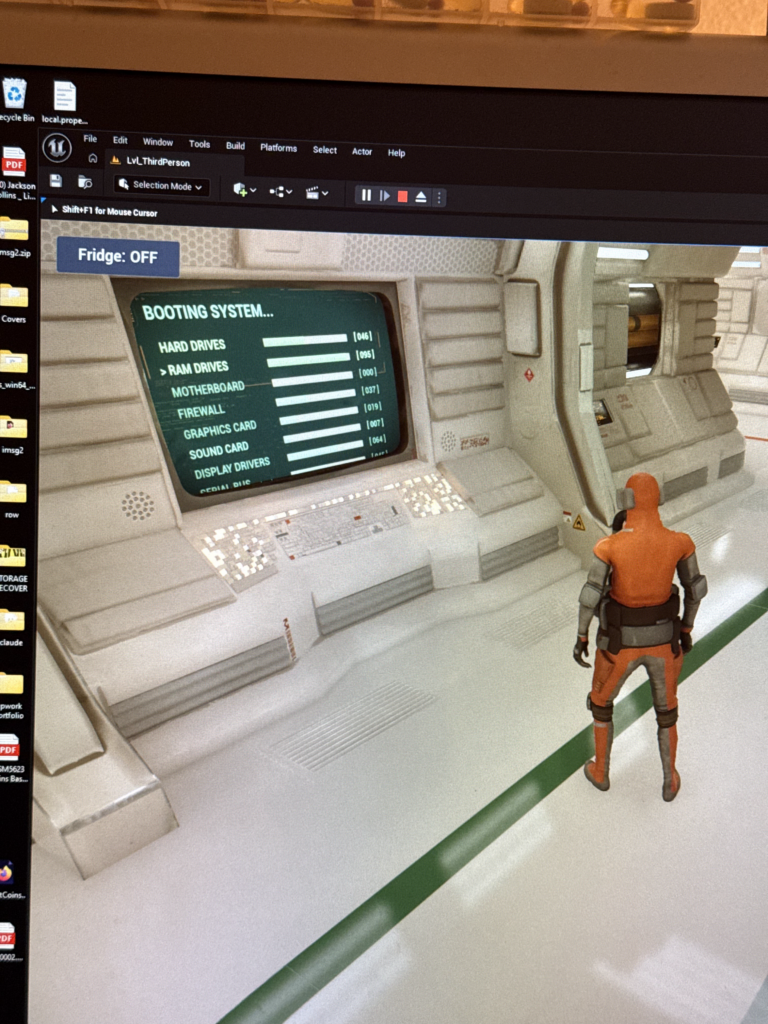
- Wall terminals. Engaging a terminal lerps the camera into first person, snaps the player to a set spot and clamps mouse-look to ±20°. The puzzle is a five-row “match the hidden target” meter that boots with a mock SpaceStationOS v3.4 loader. Left idle, glitch text slowly eats the screen. Walk away and the terminal lets you go.
- Cryo chambers. A bank of pods, each of which can flip between lit-normal and red alert with sparking Niagara effects.
- Movement. Enhanced Input WASD and mouse-look, plus a tap-Shift dash with a motion-blur boost so it reads as speed rather than a teleport, hold-Shift sprint, a no-clip ghost mode for development, and respawn when you fall out of the world. The E key resolves through one priority chain: engaged terminal, then EMT tube, then cryo toggle, then punch.
How it’s built
The project’s rule is that everything non-visual lives in C++. Widget Blueprints are empty shells reparented to C++ widget classes, which build their widget trees at runtime. Tunable actors follow a prefab pattern: a C++ base class, a Blueprint child that holds the designer defaults, and placed instances that inherit from it, so editing the Blueprint updates every instance in the level. The terminal class exposes enter, exit and input as virtual hooks, so a new puzzle can drop in without duplicating the camera and engagement code.
A recent performance pass removed per-frame work. The pause menu used to scan every terminal in the world each frame to find the active one. Now the terminal class keeps a single weak pointer to whichever one is engaged. Falling bots used to search every EMT tube twice per tick, and now they cache the tubes once at startup, since tubes never move.
Debugging with Claude Code
I wired an Unreal MCP server so Claude Code could run editor Python and console commands, move the camera and take screenshots. That let it sample bot positions during play and track down a disconnected navmesh island instead of guessing.
In progress
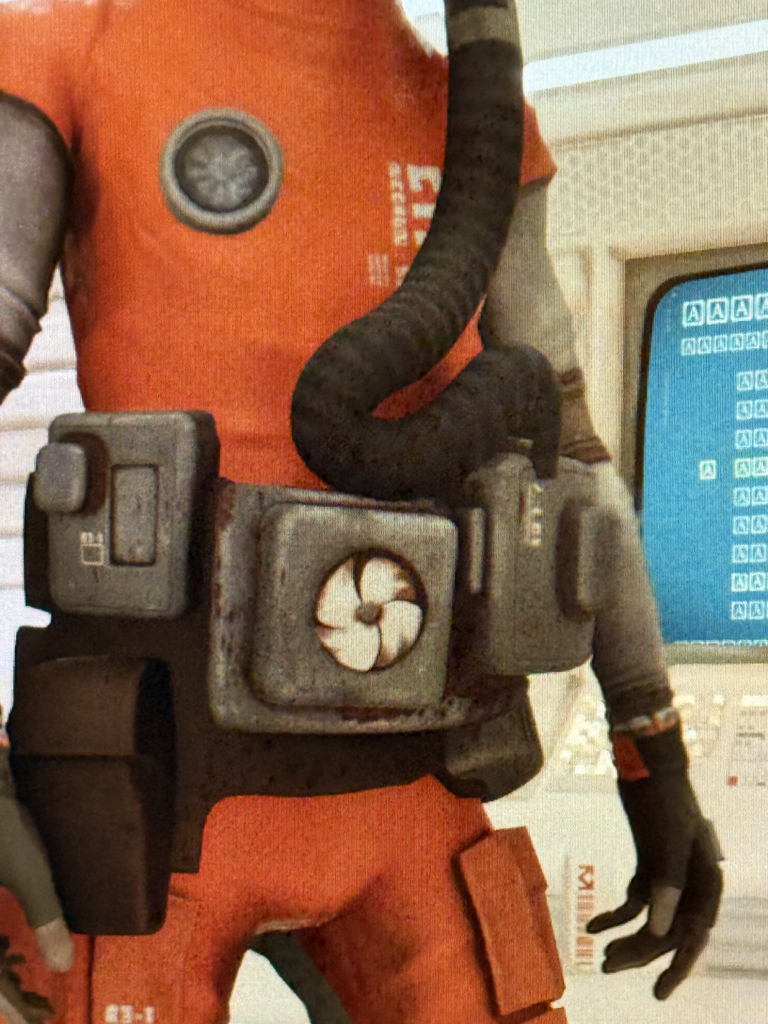
Next up is a Stratagem Hero-style arrow puzzle on the cryo panels: the terminal fakes some CLI processing, then shows a sequence of three to nine arrows to type in. Get it right and the chamber toggles. Get it wrong and the screen flashes INCORRECT and deals a new sequence. The C++ side is done, with its own idle, processing, puzzle and result states. What’s left is placing the widget on the panel face without the panel geometry hiding it.